





BRC Wire Mesh Applications in Modern Nigerian Infrastructure: Bridges, Roads, and Beyond
Nigeria’s infrastructure landscape is expanding rapidly. New projects include expressways, flyovers, bridges, and housing estates that aim to reshape the country’s economic outlook. In transportation infrastructure and other projects, engineers and contractors emphasize durable and efficient reinforcement materials. Their goal is to ensure the longevity of structures.
Concrete is recognized as the backbone of modern construction due to its high compressive strength and versatility. However, while it performs well under compression, it is inherently weak in tension. When subjected to tensile forces caused by load movement, temperature changes, or ground settlement, unreinforced concrete is prone to cracking.
Without reinforcement, cracks can widen over time, reducing service life. BRC wire mesh addresses this by providing uniform tensile reinforcement, controlling cracking, improving load distribution, and enhancing structural performance. Contractors choose BRC mesh for bridges and roads due to its consistent strength, quicker installation, and superior integrity compared to traditional methods.
What is BRC Wire Mesh?
.jpeg)
BRC wire mesh is a factory-manufactured, welded steel reinforcement grid produced from high-quality steel wires arranged in a square or rectangular pattern. Unlike manually tied rebar, which depends on on-site labour to assemble individual bars, it is pre-engineered and precision-welded under strictly controlled factory conditions.
The manufacturing process involves cold-drawn steel wires that are straightened, cut to size, and electrically resistance-welded at intersection points. This ensures consistent spacing, alignment, and bonding. Because the welding process is automated, the final product maintains structural uniformity across every sheet of material.
Standard sheets of BRC wire mesh in Nigeria typically measure 2.4m x 6m, making them convenient for large slab applications and rapid site deployment. Common specifications include A-142, A-193, A-252, and A-393, each designed for different load-bearing and structural requirements. These standardized grades allow engineers to select reinforcement based on calculated structural demand.
One of the significant reasons BRC mesh applications are preferred over manual rebar tying is quality control. Manual tying introduces variability. Spacing inconsistencies, alignment issues, and weak tying points can compromise reinforcement performance. In contrast, BRC wire mesh ensures uniform reinforcement distribution and predictable structural behavior. This consistency is especially critical in large infrastructure projects where the reliability of BRC mesh for bridges and roads directly impacts long-term durability and safety.
Applications of BRC Wire Mesh in Nigerian Infrastructure
.jpeg)
As Nigeria continues investing in transportation, modern housing, and industrial development, the versatility of BRC wire mesh in Nigeria becomes evident across multiple sectors, such as those explained below:
BRC Mesh for Bridge Construction
Bridge construction demands structural precision. Bridge decks and approach slabs must withstand continuous dynamic loads from vehicles, heavy trucks, and environmental stress. This is where BRC mesh for bridges plays a crucial role. In bridge decks, BRC mesh applications provide uniform reinforcement across wide spans. The welded grid system ensures that tensile forces are evenly distributed, reducing the likelihood of localized cracking. Because bridges experience vibration and load movement, crack control is essential to prevent water ingress and corrosion over time.
Using BRC mesh for bridges also improves load distribution in approach slabs, rather than relying on individually tied bars that may shift during concrete placement. In Nigeria, it maintains consistent reinforcement spacing. This results in stronger slab integrity and improved structural performance. Furthermore, the use of BRC mesh applications in bridges reduces installation time, a significant advantage for projects that require minimal traffic disruption.
BRC Mesh in Road and Highway Projects
Road construction in Nigeria requires reinforcement systems that control shrinkage cracking and enhance pavement strength. Concrete roads and rigid pavements go through temperature fluctuations, heavy loads, and ground movement. In this context, using BRC mesh for roads provides the needed structural support. In highway pavements, it helps reduce shrinkage cracking caused by curing and thermal/weather changes. By distributing tensile stress evenly, using BRC mesh for roads improves slab lifespan and reduces maintenance frequency.
Flyovers and airport runways also benefit from BRC mesh applications. These structures endure high-impact, repetitive loads. Precision-welded mesh ensures consistent reinforcement throughout the slab, improving structural stability under stress. Given the scale of Nigeria’s road expansion programs, incorporating BRC mesh for roads enhances durability while supporting faster construction and completion timelines.
Industrial Floors and Warehouses
Nigeria’s logistics sector serves as a key engine of growth for the retail economy, with a growing number of warehouses, manufacturing plants, and distribution centers emerging across the country. These facilities require heavy-duty floor slabs capable of supporting forklifts, storage racks, and industrial equipment. BRC wire mesh is often used in large industrial slabs because it provides high load-bearing reinforcement across wide surfaces. The uniform grid structure enhances crack resistance in expansive concrete floors. For logistics parks and manufacturing plants, BRC mesh applications enable contractors to reinforce large floor areas seamlessly. Compared to manual reinforcement methods, BRC mesh significantly reduces labour requirements while maintaining structural reliability.
Residential and Commercial Buildings
In residential and commercial construction, BRC wire mesh is used in floor slabs, foundations, and driveways. For housing estates, BRC mesh applications provide crack control and improved load distribution in ground-floor slabs. Builders appreciate its ease of placement and reduced installation time.
In commercial buildings, floor loading requirements are often higher. Here, selecting appropriate mesh specifications, such as A193 or A252, ensures structural strength aligns with engineering calculations. Driveways within estates and commercial facilities also benefit from BRC mesh for roads, particularly in areas experiencing moderate vehicle traffic. Uniform reinforcement helps prevent early deterioration and damage.
Drainage Systems and Culverts
Flood management and drainage infrastructure are critical in Nigeria’s climate, especially during heavy rainy seasons. Reinforced concrete drains, culverts, and retaining walls require reliable tensile reinforcement to withstand hydraulic pressure and soil movement. BRC wire mesh in Nigeria is used in precast drainage systems and on-site cast concrete channels. The precision spacing within the BRC mesh ensures even reinforcement, helping prevent structural cracking under hydraulic stress.
Advantages of Using BRC Mesh in Large-Scale Infrastructure
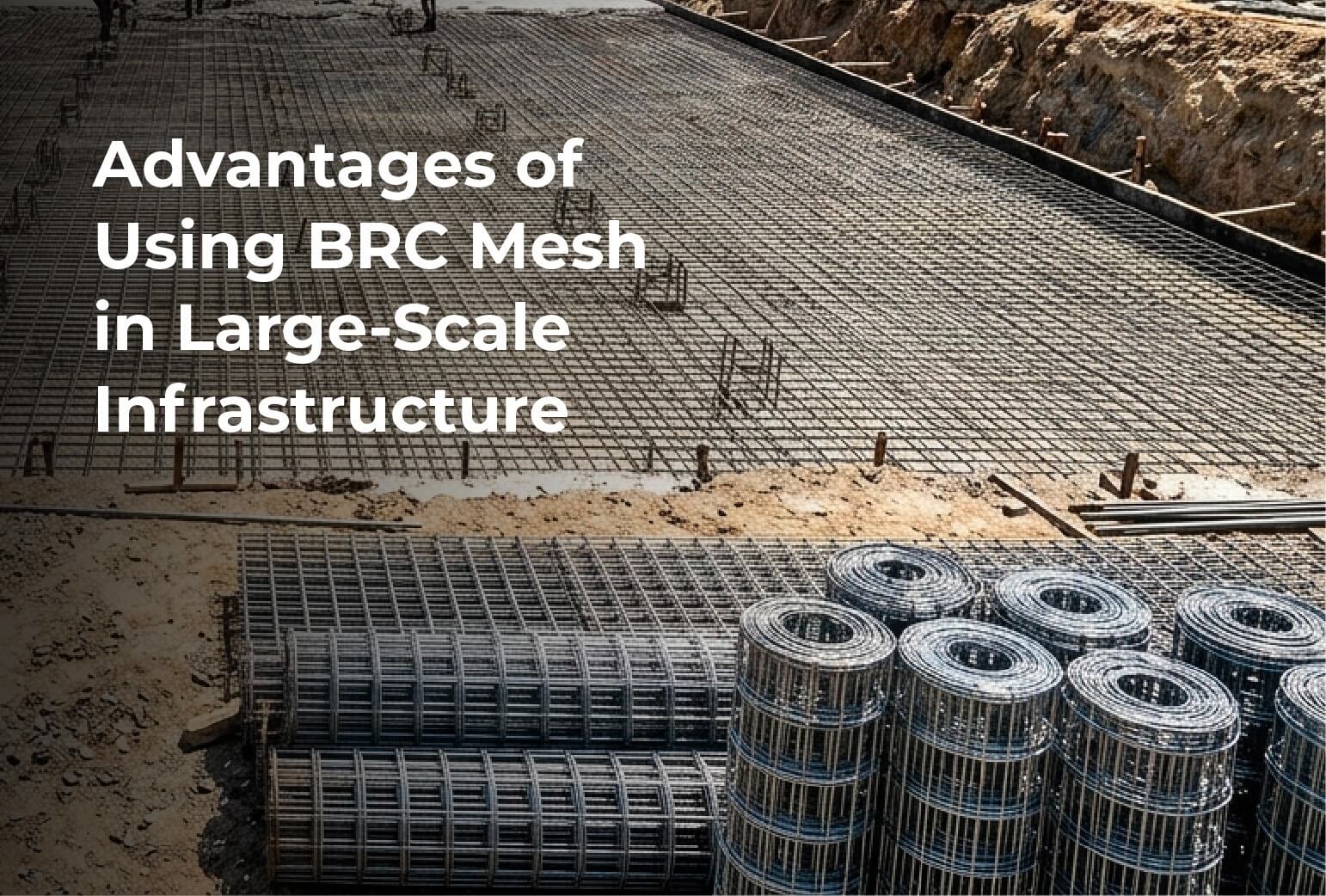
The widespread adoption of BRC wire mesh in Nigeria across public infrastructure and private developments comes from its measurable advantages. These advantages include:
- Faster installation is a major benefit. Large sheets of mesh can be placed quickly, reducing construction time compared to manually tying steel bars. This efficiency is especially important in high-volume BRC mesh applications such as highways and industrial floors.
- Uniform reinforcement: Because BRC mesh for roads and BRC mesh for bridges are factory-welded, spacing and alignment remain consistent, reducing structural variability.
- Labour costs are reduced significantly. Fewer workers are needed for installation, and on-site fabrication errors are minimized. This contributes to overall cost-effectiveness in large infrastructure projects.
- Durability also improves. Uniform distribution of tensile reinforcement enhances crack control, which extends the lifespan of concrete structures.
- Material wastage is lower compared to manual rebar cutting and tying, making BRC mesh applications more resource-efficient.
Why BRC Mesh is Ideal for Nigerian Climate Conditions
Nigeria’s climate presents unique construction challenges. We experience high humidity levels, intense rainfall, and fluctuating temperatures that can compromise poorly reinforced concrete structures. The structural integrity provided by BRC wire mesh in Nigeria helps reduce crack formation caused by temperature-induced expansion and contraction. In regions experiencing heavy rainfall, reinforced slabs reduce the risk of water penetration.
Corrosion is a significant concern in humid environments. The quality of steel used in BRC mesh applications is crucial. High-grade steel and proper concrete cover ensure longer service life, particularly in bridge decks and highways where BRC mesh used for bridges and road construction is exposed to moisture.
Selecting reliable reinforcement materials is essential for infrastructure resilience across Nigeria’s diverse climatic zones.
Choosing a Reliable BRC Mesh Supplier in Nigeria
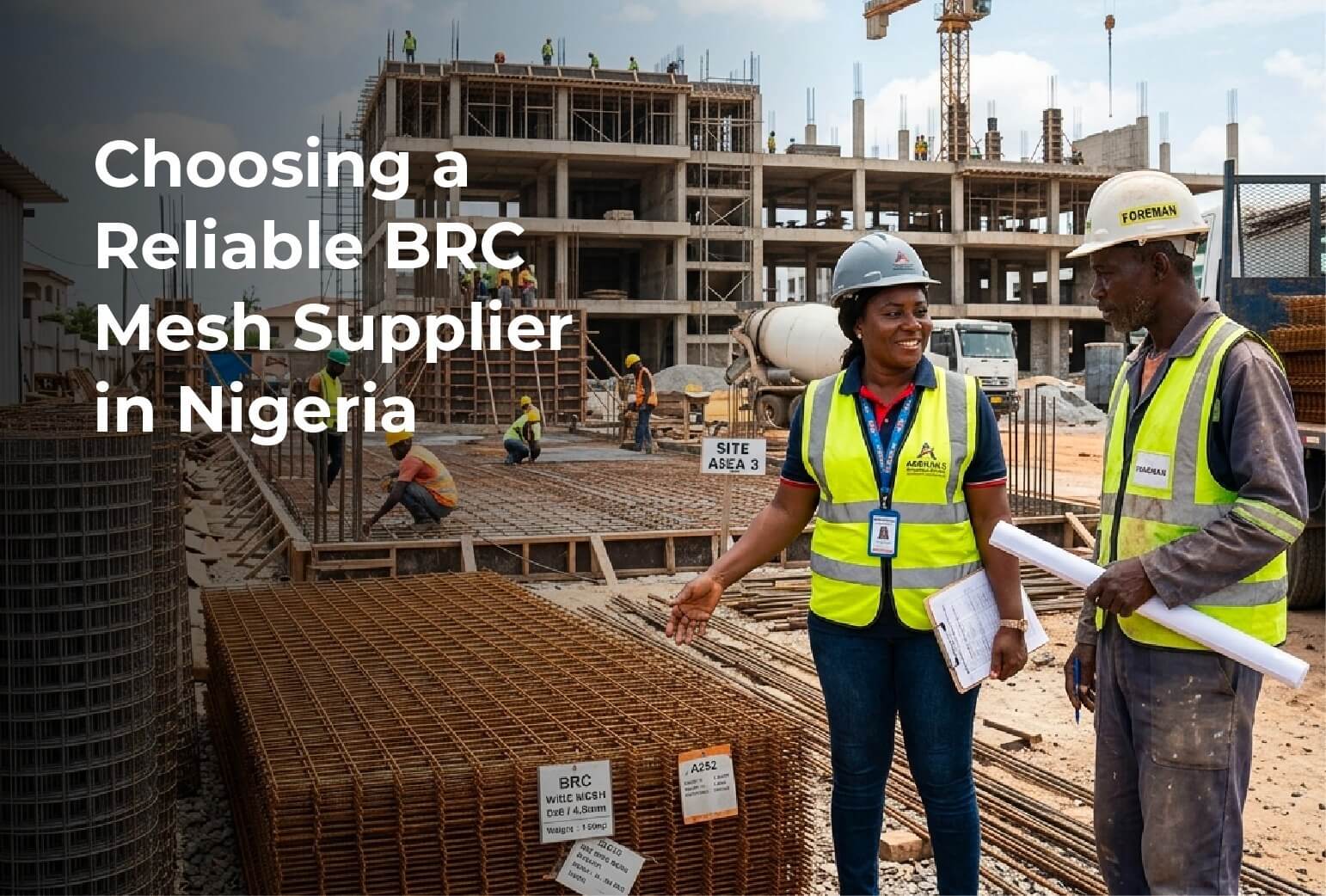
With a rise in demand, selecting a trusted supplier of BRC wire mesh in Nigeria is an essential part of the construction process. Quality standards should meet recognized engineering specifications. Reputable suppliers provide mesh grades such as A142, A193, A252, and A393, ensuring compatibility with structural and building requirements. Certifications and quality assurance processes demonstrate production reliability. Consistency is very important for large-scale BRC mesh applications, particularly in projects involving BRC mesh for bridges or roads, where structural safety is the required standard.
Availability and bulk supply capacity are equally important. Infrastructure projects often require large quantities to be delivered on schedule. Working with a supplier capable of fulfilling bulk orders ensures project continuity. The versatility of BRC mesh application and usage across various sectors highlights its value in delivering uniform reinforcement, reduced installation time, and improved structural performance. When BRC mesh is used for bridges or roads, it leaves a lasting impact.
As road networks continue to expand in major cities and smaller ones across Nigeria, the importance of using high-quality reinforcement materials will only increase. Contractors, engineers, and developers looking for dependable solutions for their projects should prioritize working with certified, high-standard BRC mesh products.
Securing bulk quantities of BRC wire mesh in Nigeria from a dependable manufacturer ensures consistent specifications, uniform welding, and reliable supply and delivery timelines. In large infrastructure projects, inconsistencies in reinforcement can compromise performance and delay execution. Working with an established manufacturer like Quantum Steels Nigeria Limited, known for consistent production and precision manufacturing standards, helps eliminate uncertainties and supports smoother project delivery nationwide.
Contact Quantum Steels Nigeria Limited today through +234 8150895614 to request product specifications or visit our offices to confirm availability and secure bulk orders of high-quality BRC mesh for your next project.
Looking for high-quality BRC wire mesh in Nigeria?
Partner with a trusted supplier for durable reinforcement, consistent quality, and fast bulk delivery for your infrastructure projects.