





Bulk Steel Buying vs Small Orders: Which Saves More Money?
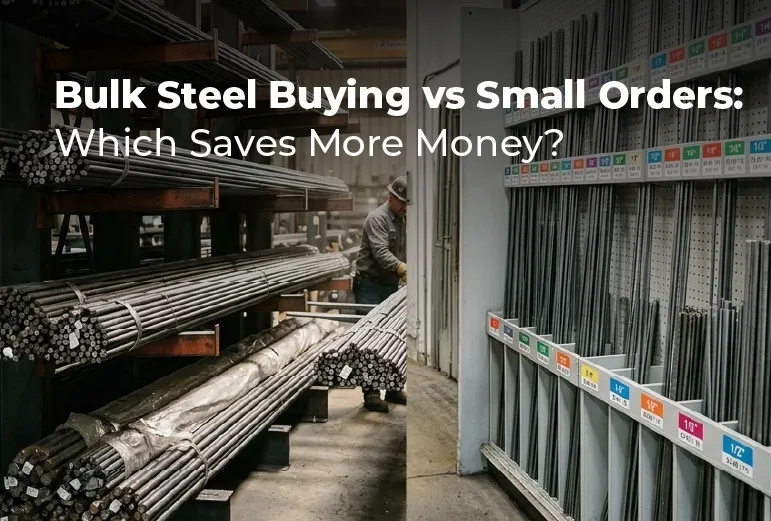
In construction, cost control relies on the accumulation of many small, strategic choices. Among these, steel procurement stands out as one of the most financially significant. Steel not only accounts for a large portion of structural work; it is also one of the most price-sensitive materials in the Nigerian market. Fluctuations in exchange rates, import dependencies, and supply chain constraints can cause the steel price per ton to shift within short periods, often with direct consequences for project budgets.
For developers, contractors, and individual home builders, this creates a recurring dilemma: is it more cost-effective to invest in bulk steel buying, or to spread purchases across the project timeline through smaller, more flexible orders? On the surface, the answer appears straightforward, which assumes buying in bulk should be cheaper. However, the reality is more nuanced. Cost savings are influenced not just by price per ton, but by factors such as proximity, logistics, storage, risk exposure, and project discipline. While either approach is used across the industry, they produce very different financial outcomes when examined over time.
This article examines both approaches in depth, not simply to declare a winner, but to provide a clearer framework for making smarter procurement decisions in the context of construction material cost in Nigeria.
What is Bulk Steel Buying?
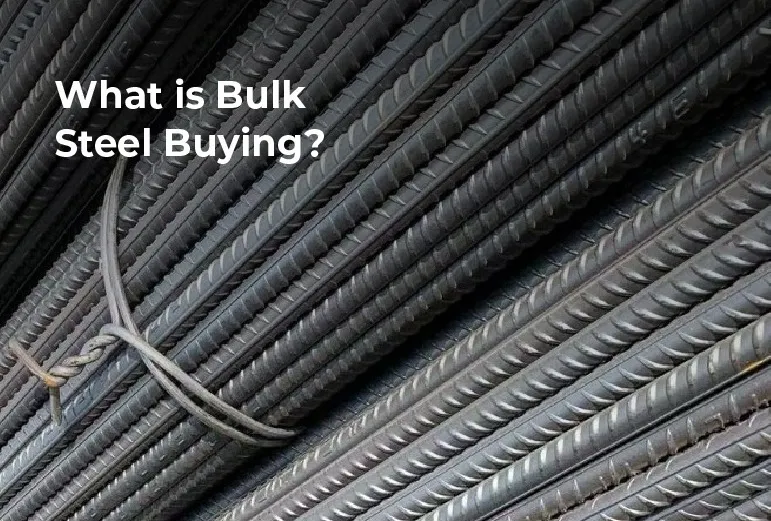
Bulk steel buying refers to the procurement of large quantities of steel in a single transaction, typically measured in tons and planned for construction phases. It is a strategy most commonly adopted by contractors and developers managing medium to large-scale projects where material requirements can be estimated with a high degree of accuracy.
In practice, bulk purchasing is not always about volume. Suppliers are more inclined to offer competitive pricing when dealing with large orders, which directly reduces the steel price per ton for these purchases. This pricing advantage is the primary reason many professionals choose to buy steel in bulk in Nigeria, particularly in projects where margins must be carefully protected.
The materials often purchased in bulk include reinforcement bars (TMT), structural steel sections, pipes, and wire mesh, which are components that are foundational to most construction processes. However, the success of this approach depends heavily on planning. Buyers must have the capacity to manage delivery, storage, and usage efficiently, as the responsibility for maintaining material quality shifts significantly once the steel is delivered.
What are Small Steel Orders?
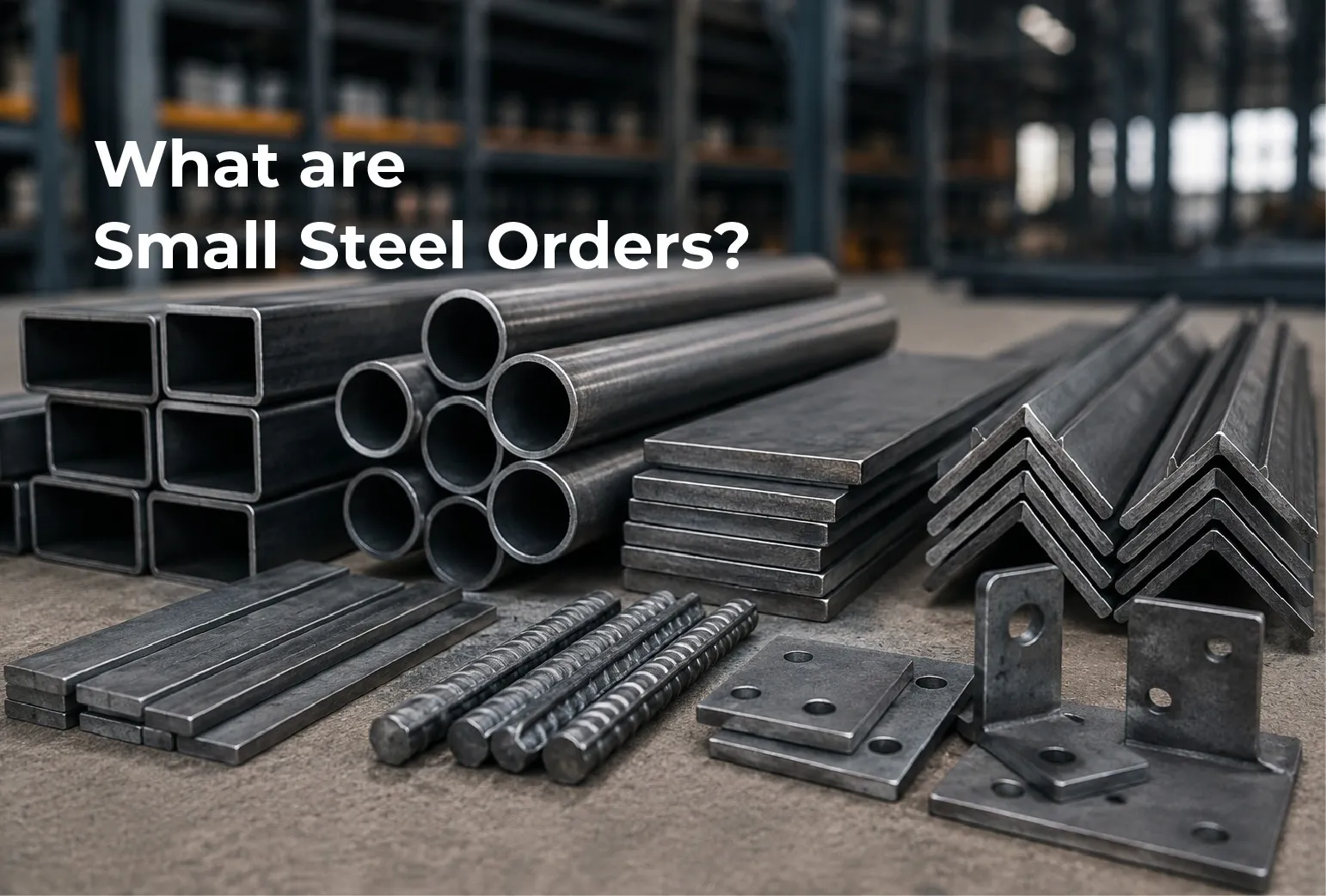
Small steel orders involve purchasing materials incrementally, often in alignment with specific phases of construction. Rather than committing to a large upfront purchase, builders procure steel as the need arises, often for foundation work, framing, or finishing.
This approach is common among individual home builders and smaller contractors who may be working with limited capital or uncertain timelines. It allows for flexibility, enabling adjustments in response to design changes, funding availability, or unforeseen project delays.
However, while small orders reduce the burden of upfront investment and eliminate the need for extensive storage, they introduce a different kind of risk. Each purchase is subject to current market conditions, meaning that buyers are repeatedly exposed to fluctuations in steel prices. Over time, this can lead to higher cumulative costs, even if each purchase appears manageable.
Bulk Buying vs Small Orders – Key Comparison
The true difference between these two approaches becomes clearer when examined across the key cost drivers that shape construction spending.
From a pricing perspective, bulk steel buying consistently offers lower unit costs. Suppliers reward volume with discounts, making it possible to achieve immediate steel cost savings at the point of purchase. Small orders, by contrast, are typically priced at standard market rates, which are inherently higher and less negotiable.
Transportation introduces another layer of distinction. Bulk purchases require a single or limited number of deliveries, thereby reducing logistics expenses. Small orders, on the other hand, require repeated transportation, and in a market like Nigeria, where logistics costs are influenced by fuel prices and infrastructure challenges, these repeated expenses can accumulate quickly.
Planning also plays a big role. Bulk buying demands a higher level of project coordination, including accurate quantity estimation and readiness for storage. While this requires more discipline upfront, it often leads to smoother execution. Small orders offer flexibility, but this flexibility can come at the cost of efficiency, particularly when delays in delivery disrupt workflow.
Market exposure is one of the most important factors. Bulk buyers effectively lock in prices at the time of purchase, insulating themselves from future increases. Those relying on small orders remain vulnerable to price changes throughout the project, which can significantly inflate the final cost.
Finally, storage and handling must be considered. Bulk buying requires adequate facilities to protect materials from environmental damage and theft, while small orders minimize this requirement. However, the convenience of reduced storage must be weighed against the higher long-term cost.
Hidden Costs to Consider
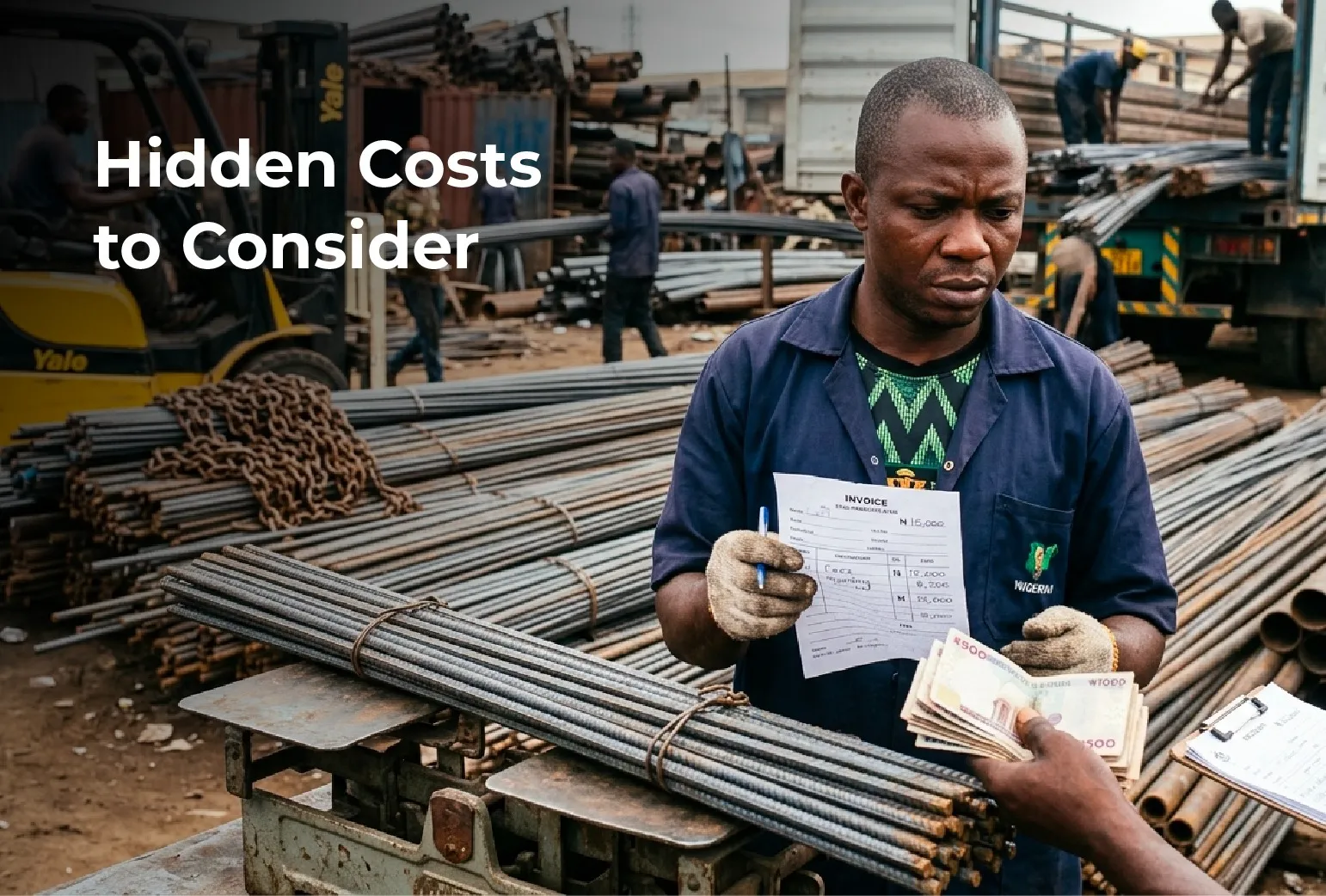
Beyond the obvious differences in pricing and logistics, there are several hidden costs that influence the true construction material cost in Nigeria.
- Storage is one of the most immediate considerations in bulk purchasing. Steel must be kept in dry, controlled conditions to prevent rust and structural degradation. This may require investment in protective coverings, elevated platforms, or even rented warehouse space.
- Material wastage is another factor. Improper handling or prolonged exposure can lead to damage, reducing the usable quantity of steel and effectively increasing the cost per unit.
- For small orders, the hidden costs are less visible but equally impactful. Repeated deliveries increase not only transportation expenses but also the likelihood of delays. Each delay can disrupt construction schedules, leading to idle labor and extended timelines.
Perhaps the highest hidden cost is price escalation. In a volatile market, the decision to delay purchasing often results in paying more later. What appears to be a cautious, cash-flow-friendly approach can ultimately increase total expenditure.
Real-Life Cost Example
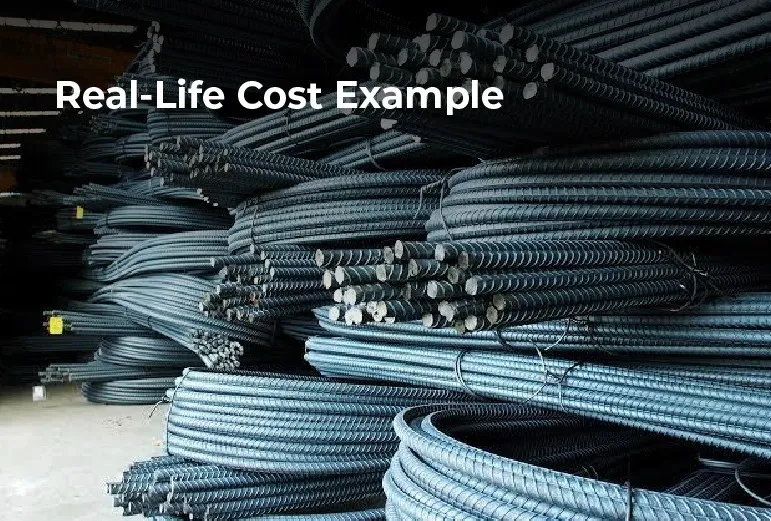
To illustrate the financial implications, consider a residential construction project requiring approximately 20 tons of steel. If the builder opts for bulk steel buying, they might secure a rate of ₦900,000 per ton, resulting in a base material cost of ₦18 million. With a single delivery and manageable storage expenses, the total project cost remains relatively stable and predictable.
In contrast, a builder relying on small orders may purchase steel in phases of 5 tons. At an average price of ₦950,000 per ton, subject to market fluctuations, the total material cost rises to ₦19 million. When additional transportation costs and minor delays are factored in, the overall expenditure can approach or exceed ₦20 million.
The difference, typically in the range of 7-10%, represents the tangible steel cost savings achieved through bulk purchasing. While this percentage may seem modest, it becomes substantial when applied to larger projects.
When Bulk Buying is the Best Choice
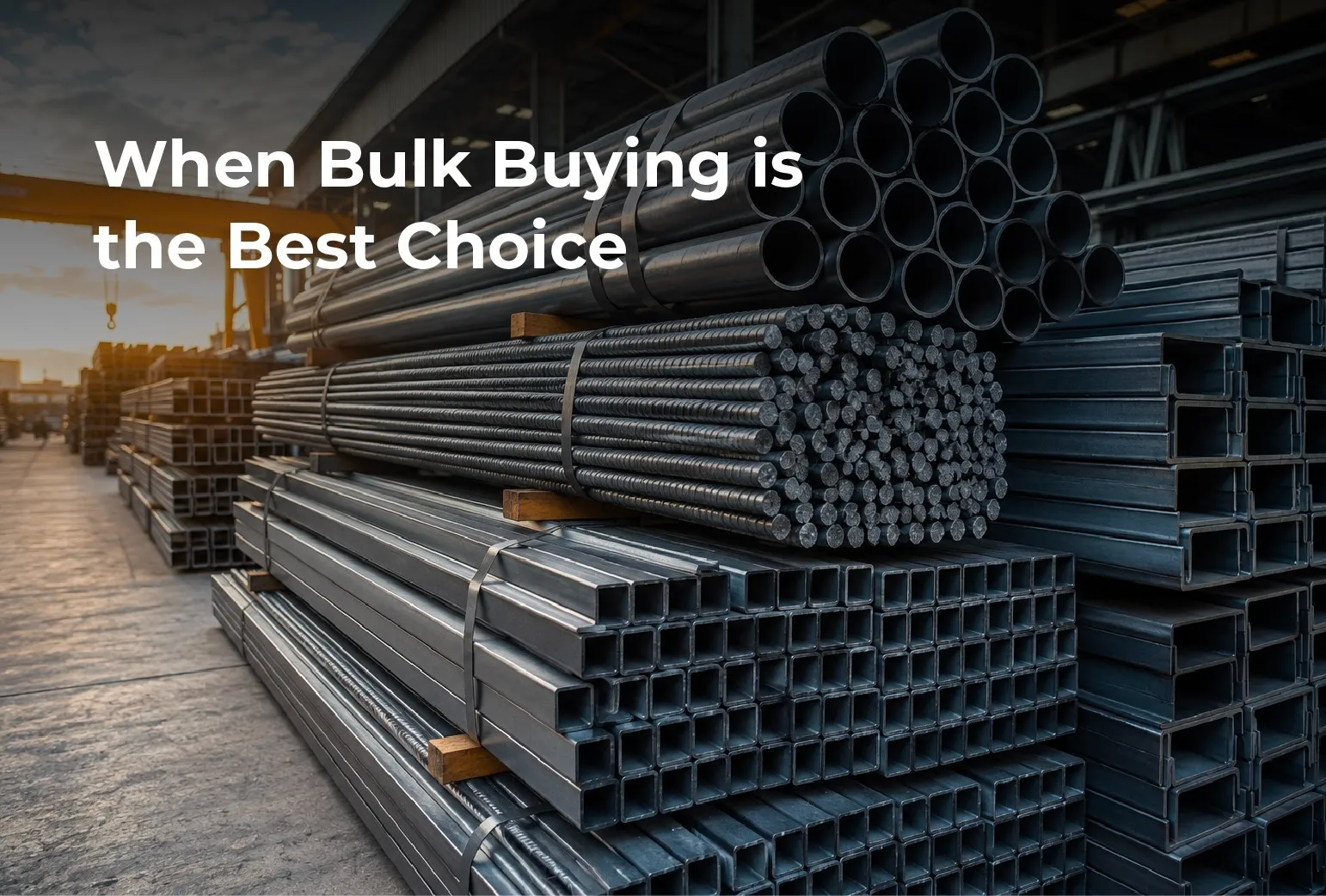
Bulk steel buying is most effective in projects where scale and certainty are present. Large developments with clearly defined material requirements benefit significantly from upfront procurement, as it allows for cost control and protection against price volatility.
It is also advantageous in situations where storage facilities are available and project timelines are stable. In such cases, the ability to secure a lower steel price per ton and reduce logistics complexity makes bulk buying a strategic choice rather than a mere cost-saving measure.
When Small Orders Make More Sense
Despite its higher long-term cost, small ordering remains relevant in specific contexts. Projects with uncertain scopes or evolving designs benefit from the flexibility it provides. It allows builders to adapt without the risk of over-purchasing materials that may not be needed.
Cash flow constraints also play a significant role. Not all builders have the capacity to commit large sums upfront, making phased purchasing a practical necessity.
In environments where storage is limited or security cannot be guaranteed, small orders reduce exposure to material loss or damage. In such cases, the higher cost is often accepted as a trade-off for reduced operational risk.
Expert Tips to Save More on Steel Purchase
Regardless of the approach chosen, effective procurement ultimately depends on strategy and discipline. Accurate planning is essential, as it ensures that quantities align closely with actual project needs. Overestimation ties up capital, while underestimation leads to costly last-minute purchases.
Working with reliable suppliers is equally important. Consistency in quality, pricing transparency, and dependable delivery can significantly influence overall efficiency.
Monitoring market trends allows buyers to make informed decisions about timing, particularly in a volatile pricing environment. Avoiding reactive, last-minute purchases is one of the simplest ways to reduce unnecessary expenses.
An effective approach is combining bulk steel buying with phased delivery. This strategy allows builders to secure favorable pricing while minimizing storage challenges, offering a balanced path to achieving meaningful steel cost savings.
The choice between bulk steel buying and small orders is not simply a matter of preference. It is usually a decision shaped by project size, financial capacity, and operational readiness. While bulk buying consistently delivers lower costs and greater price stability, it requires careful planning and infrastructure to execute effectively.
Small orders, though more expensive over time, provide flexibility in uncertain conditions and reduce the burden of upfront investment. The most effective procurement strategies recognize the strengths and limitations of both approaches and apply them where they are most appropriate.
In the context of rising construction material costs in Nigeria, making informed steel purchasing decisions is about ensuring the long-term success and sustainability of the project.
Frequently Asked Questions
Bulk steel buying is generally more cost-effective because it reduces the steel price per ton and lowers logistics expenses, but it requires proper planning and storage to realize those savings fully.
Savings from bulk purchases typically range between five and fifteen percent, depending on project size and market conditions.
The primary risks of bulk buying include storage challenges, potential material damage, and the need for significant upfront capital.
Small orders can increase overall construction costs due to higher unit pricing and repeated transportation expenses, even though they offer greater flexibility.
To store steel safely, it should be kept in a dry, covered environment, elevated from the ground, and protected from moisture to prevent rust and maintain structural integrity.
Looking for high-quality BRC wire mesh in Nigeria?
Partner with a trusted supplier for durable reinforcement, consistent quality, and fast bulk delivery for your infrastructure projects.