





The Need for Quality Wire Nails in Nigeria's Construction Sector

Choosing the right wire nails directly impacts the safety and longevity of construction projects. The durability of a structure depends not only on concrete or steel but also on essential fasteners such as wire nails. With the wide variety available in Nigeria, builders and procurement managers often face a complex selection process. This guide from Quantum Steels explains how to select the best wire nails for building.”
The Need for Quality Wire Nails in Nigeria's Construction Sector
The reliability of wire nails is crucial in Nigeria’s construction sector, where humidity, rainfall, and tight project timelines pose constant challenges. These nails play an essential role in transferring loads, reinforcing joints, and keeping structures securely fastened.
Using substandard nails can lead to serious problems, including premature corrosion, bending under pressure, and poor holding power—all of which compromise structural integrity. Low-quality fasteners often result in costly rework, project delays, and potential failures. In regions with frequent rain, for example, improperly galvanized nails corrode quickly, weakening wood frames and roofing. To prevent these issues, always source wire nails from reputable suppliers like Quantum Steels, ensuring they meet strict Nigerian manufacturing standards. Prioritizing quality and choosing premium-grade steel nails is essential for long-term structural safety and durability.
Types of Construction Nails Explained
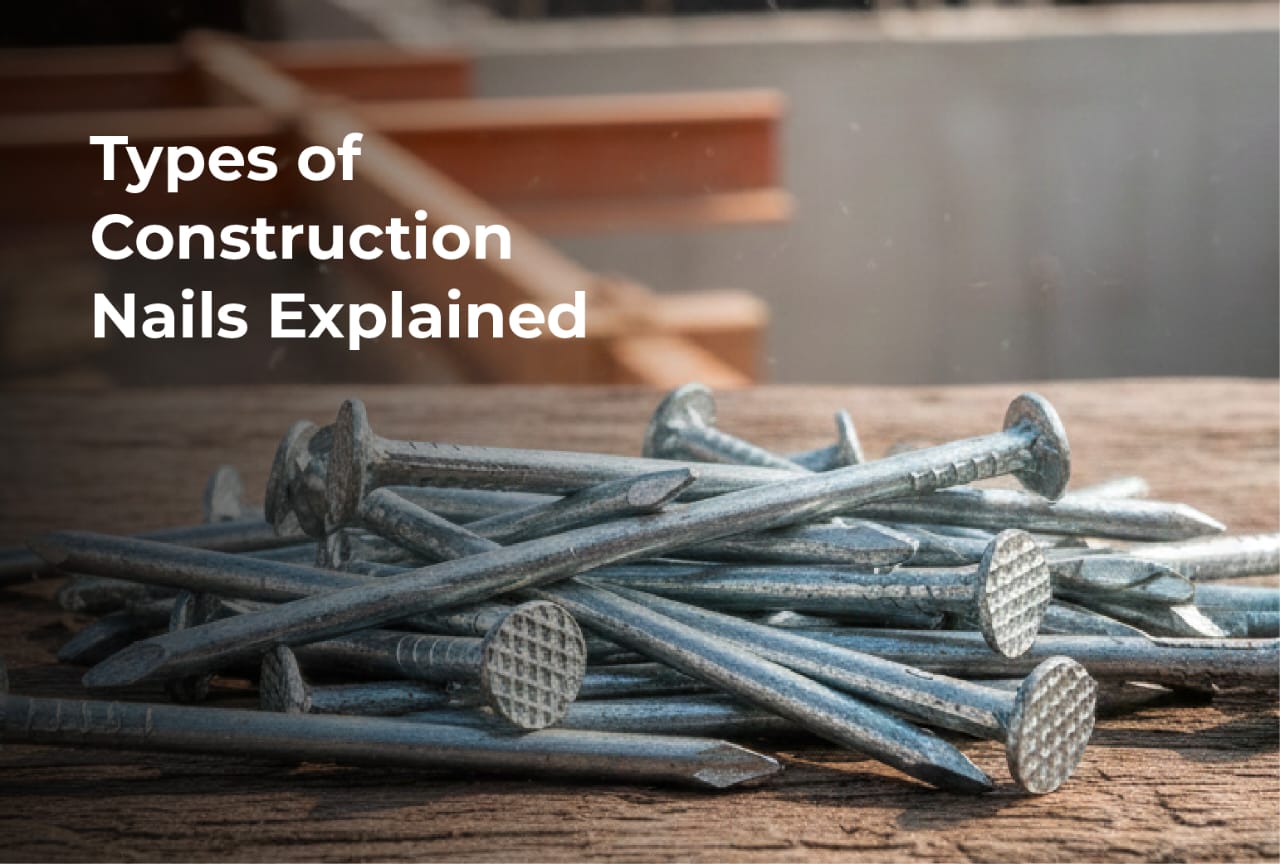
Selecting the right type of nail is essential for ensuring superior steel nail quality in any construction project. Each application requires a specific wire nail to maintain structural integrity and achieve the desired finish.
Below are two essential categories:
- Common Wire Nails: These are among the most widely used wire nails. They feature a thick shank, a large flat head, and a sharp diamond point. Common nails are ideal for rough framing, heavy-duty carpentry, and general construction, where the nail head will either remain visible or be covered.
- Finishing Nails: These nails feature a small, slightly rounded or cupped head, often called a “brad head,” which is designed to be driven below the wood surface using a nail set. They are essential for interior trim work, cabinetry, and other applications where the fastener must remain concealed for a clean, aesthetic finish.
- Concrete Nails (Masonry Nails): Not strictly classified as wire nails, these are manufactured from hardened steel for driving into masonry, brick, or concrete blocks, offering a specialised fastening solution.
- Roofing Nails: These durable roofing nails are specialty fasteners designed with a large, flat head and a short, often galvanized shank. Their broad head provides strong surface contact, securing roofing materials, such as felt or corrugated sheets, and preventing pull-through.
Which Nail for Which Job?
The specific task will determine which Quantum Steels nails are most suited. For general framing, opt for standard wire nails sourced locally. Roofing applications demand robust, weather-resistant fasteners—hot-dip galvanized roofing nails are ideal for these scenarios. When tackling detailed woodwork or interior trim, choose finishing nails from a trusted Nigerian supplier to ensure a seamless finish.
Key Features of High-Quality Wire Nails
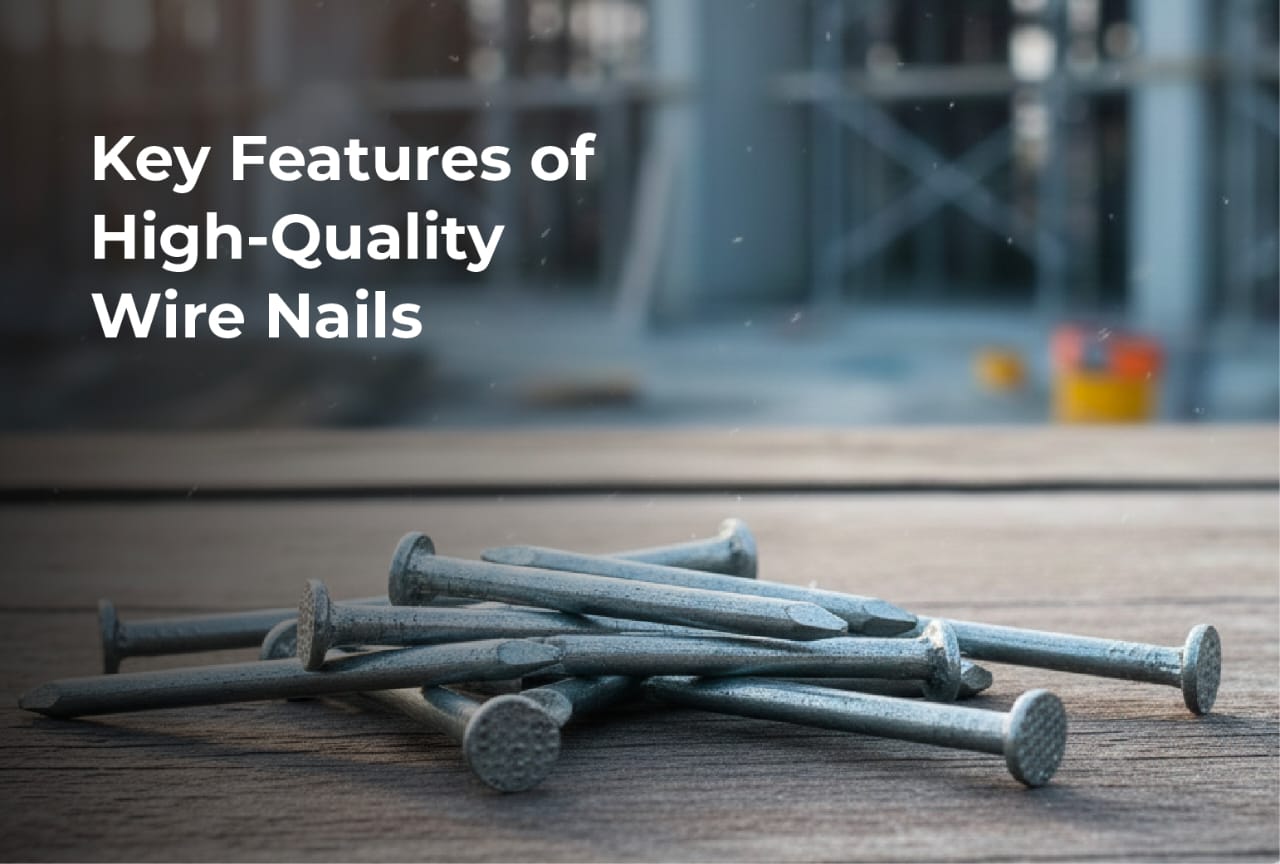
The longevity and safety of any construction are directly proportional to the quality of steel nails used. When purchasing wire nails from a construction nail supplier in Nigeria, a discerning buyer must focus on three core areas: material, coating, and geometry.
Material Quality (Steel, Coating, Rust Resistance)
Steel nail quality begins with the raw material. The best wire nails for building are typically made from high-carbon steel wire for superior tensile strength and hardness. This is especially true for any nail manufacturing process that aims for durability. Quantum Steels nails are manufactured using precisely drawn steel wire to ensure they can be driven without bending and resist high forces.
- Hot-Dip Galvanized Nails: These durable roofing nails and common nails are coated by dipping them into molten zinc, forming a thick, highly protective coating that is superior to electro-galvanizing. This process, essential for durable roofing nails and exposed timber, delivers the highest level of rust resistance, a key indicator of quality for any construction nails supplier in Nigeria.
- Bright Finish Nails: These lack a protective coating and are only suitable for interior, dry applications where they won't be exposed to moisture.
Size, Gauge, and Matching Application
The size of wire nails is defined by two key metrics: length and gauge (or diameter). Construction nails should always be matched to the thickness and density of the materials being joined.
- Length: A general rule of thumb for effective fastening is that the nail should penetrate the receiving material by at least two-thirds of its length. For instance, joining two pieces of 1-inch-thick wood might require a 3-inch nail.
- Gauge (Thickness): The gauge is vital for the quality of steel nails and holding power. Thicker nails (lower gauge number) offer greater shear and withdrawal resistance and are the best wire nails for building heavy structural components. Thinner nails (higher gauge number) are used for lighter materials where splitting is a concern, such as trim.
Understanding the quality standards in nail manufacturing in Nigeria is critical to ensuring that when you buy nails, you receive products that deliver maximum efficacy and longevity. Consistent adherence to these quality parameters distinguishes Quantum Steels nails and justifies the investment in premium galvanized nails.
Best Practices for Selecting and Using Nails
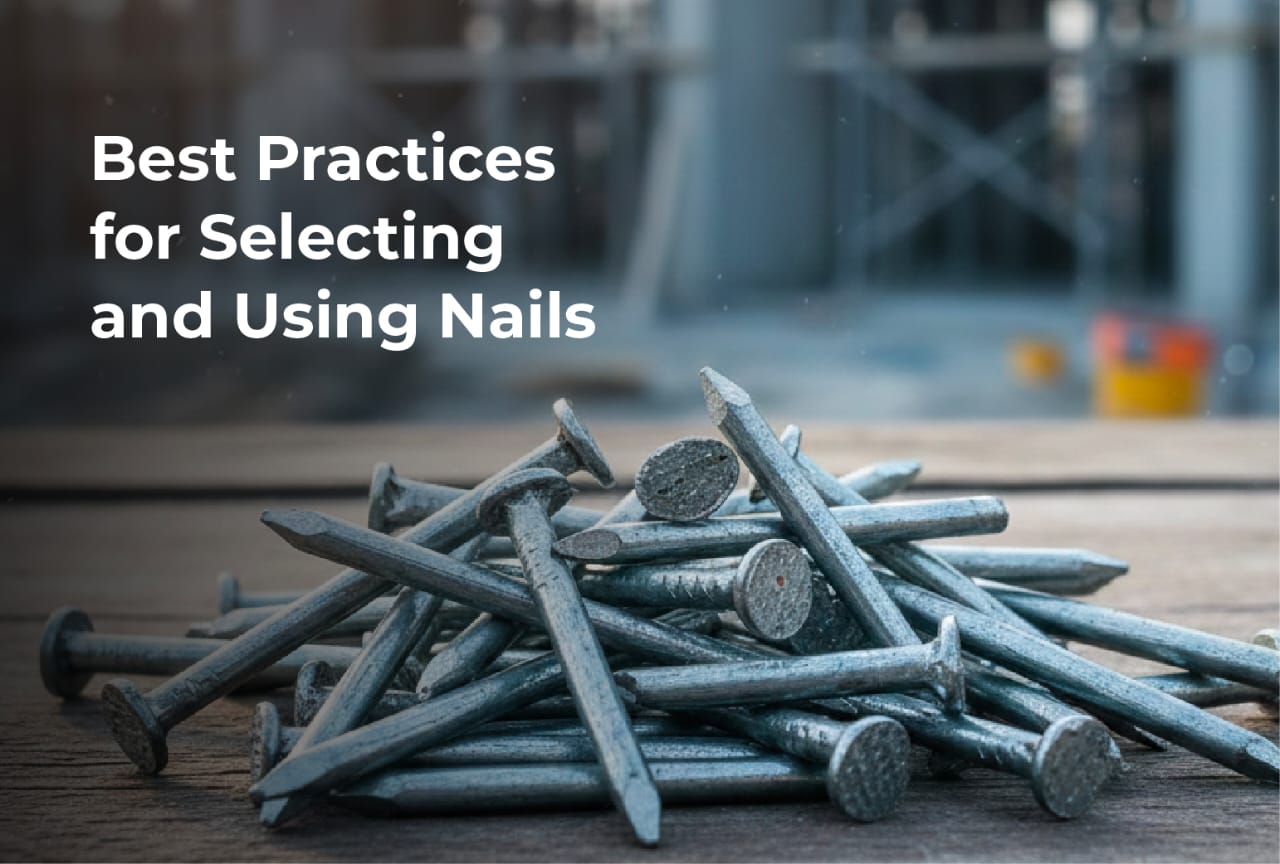
Selecting the right fastener goes hand in hand with proper installation. Even the best wire nails for construction can fail if the wrong size is used or if driven incorrectly. Following best practices helps ensure maximum performance and longevity from every construction component.
Picking the Right Length and Thickness
One of the most common mistakes in construction in Nigeria is adopting a one-size-fits-all approach to nails. Different tasks require different types of nails to ensure structural integrity and durability. Partnering with a reliable construction nails supplier provides access to the technical expertise needed to make these choices. Before purchasing nails in bulk, consult your supplier about nail specifications to meet your project's structural and environmental requirements. This careful, application-focused approach ensures steel nail quality and safeguards the overall integrity of your construction project.
Frequently Asked Questions
Understanding the nuances of wire nails can significantly improve construction efficiency and quality. Here are some of the most common questions Nigerian builders ask when sourcing for nails.
- What nail types are best for block work versus wood framing?
- How should I handle bulk orders of wire nails in Nigeria?
- What sets Quantum Steels' nails apart in the Nigerian power generation companies market?
For traditional wood framing, common wire nails- along with box nails, which are a slightly thinner variant- are the primary types used in construction. The choice should also take into account the moisture content of the wood; if the wood is green, the nail should be galvanized to prevent rust caused by moisture. For block work (concrete or hollow blocks), specialised fluted or hardened concrete nails are required. Standard wire nails will not penetrate block or masonry and will simply bend. Quantum Steels nails include a range of masonry fasteners specifically hardened for the tough Nigerian building blocks.
When placing bulk orders for wire nails from a construction nails supplier, prioritize consistency and packaging. High-quality nail manufacturing ensures that the weight, count, and gauge remain uniform across all batches. Whether you're ordering durable roofing nails or common nails, always check for consistent galvanization to ensure steel nail quality throughout the project. Insist on secure packaging to prevent spillage or mixing of different nail types on site. Choosing a reliable, large-scale supplier—such as Quantum Steels—that can guarantee a steady supply of premium construction nails is the most efficient way to manage major projects
Quantum Steels prioritizes quality and consistency in its nail manufacturing process in Nigeria. Unlike some imports, Quantum Steels nails are produced with steel compositions and coatings (like heavy-duty galvanization) specifically optimized for the challenging Nigerian environment. This local focus ensures superior penetration, holding power, and rust resistance, making them the preferred choice for those seeking the steel nail quality for both routine framing and specialised uses such as durable roofing nails. The success of any Nigerian construction project hinges on the quality of its components, and the choice of wire nails is a fundamentally critical decision. By moving from price-only decisions to a quality-first approach, builders can safeguard structures against the inevitable challenges of the local climate.
Quantum Steels is committed to advancing high-quality nail manufacturing, offering builders a reliable source for premium construction nails that meet world-class standards. This commitment to quality and service ensures that every construction is built to last, strengthening the future of Nigeria’s infrastructure.
Don't compromise your project's integrity with substandard fasteners. Contact Quantum Steels today via www.quantumsteelsnigeria.com to consult with our experts on the right Quantum Steels nails and specifications for your next project. Ensure you buy nails that deliver guaranteed steel nail quality and durability. Reach out now to place your bulk order and build with confidence.